The article about Persepolis in schools in Chicago and the freedom to teach highlighted the importance of graphic novels. McNicol advocates for comic books in schools by saying they relate to school curriculum. Reading comics allows students to develop a different type of reading, one that includes all the senses. The teaching of these comics is quite difficult and therefore teachers may need support when doing this so that students can grasp what they need to from the novel. Persepolis was the main example of how comics can be taken the wrong way– this book was banned due to one or two images, not the story all together. The themes in comics are usually distressing and they should be discussed in class because this develops maturity in students. The Ted talk video was additionally on the topic of comics, but more specifically the conventions of comic books. The purpose of this talk was to present to the audience the importance of comic books and how they existed in history and only have changed slightly since then. Comics embrace all of the senses and let the reader imagine parts of the story, making them stronger readers. In addition, the talk relates paper comics to digital media and that lots of work had to be done to make it easy to navigate a graphic novel online. Comics have a spatial relationship with time and the interwebs couldn’t catch that until the speaker proposed an “infinite canvas,” which gave them the tools to write continuous long comics online. The lecture wasn’t about comics specifically but about reading in general. Gaiman grinds into the listeners head that reading for pleasure and reading fiction is significant to every age group. Starting as kids is vital, so Gaiman pinpoints and talks to parents about how to make them love reading and learn that it is an enjoyable thing. He states that fiction is an escape of the real world but one that offers knowledge of the real world– there is always some truth in the “falseness” of fiction. He continues to speak on the importance of libraries and librarians. Libraries are the “gate to the future,” as we continue into a digital age, the information stored in libraries must be preserved because it connects us to our past. He finishes on the obligations as parents and as readers, that we should do it for pleasure and that we must preserve libraries.
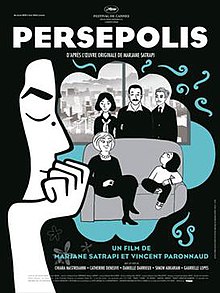
In high school, once again in my IB english class, I was given the opportunity to read the graphic novel Persepolis. This novel offered many daunting themes, but overall I am so glad I read it. I had never dived into the world of comics, and I never would have if it weren’t for that class. Persepolis was an extremely interesting coming of age story with so much depth to it. Marjane’s choice to write about the Islamic Revolution as a part of her life was a risky choice that cause many controversies, but it ultimately made her story that much more intriguing. She was able to take her reader on a relatable emotional roller coaster. Rather than just analyzing the words like I would in a written novel, I was able to discuss the images, “sounds,” and colors. This completely changed what I thought I knew about the analysis of books, and I found so much more meaning in this form of novel. The most significant point of reading this was discussing it in class. My teacher gave us background information on the book which then facilitated very strong discussion in class. We were able to present our own ideas but grow off of others analysis as well. I now believe comic books are very important and should be taught about in all curriculum.
Why do you think reading fiction at a young age aids one so much in the future, and how would continuing to read and use libraries in the 21st century benefit you now?


 EDU 185: Gigi's Blog
Hello Gigi! Coincidentally, I also ended up reading Persepolis in High School as well, in a class titled World Literature. I agree completely that Comic Books add a different kind of depth to the reading. As you pointed out, they enabled new discussions revolving around images, colors, and placements. Just the other day, I had watched a youtube video where the creator offhandedly mentioned why he preferred comics, and to him, the comics were special because of the tool of panel placement and size. You will always (in English) read text from Left to Right, then to the line below it. With comics, you can choose to have a humongous panel spanning a full page or have one tall vertical panel with 3 small panels to its right. Comics give the author more tools to format their work, and therefore, allow the author to convey more ideas to their readers.
LikeLike
I also had the pleasure of reading “Persepolis” in my IB English class. I completely agree with your commentary on the text’s ability to facilitate quality in-class discussions; I found that I discovered much more depth and uncovered multiple other interpretations of nuances in the text when I discussed the novel with my peers. I think that this has to do in large part with the ideas brought up by Sarah McNicol when she talks about comics as an interaction between the author, the reader, and the reader’s individual experiences.
In response to your question, I think that reading fiction at a young age fosters a love of imagination and possibility in growing learners. As these individuals age, they are able to maintain this eternal longing for something different, something new, and something imagined. Just as the prescribed texts mentioned, today’s change is brought about by yesterday’s imagination. By harnessing the possibilities of fiction at a young age, we are able to ensure that our children understand that anything is possible if they can create it, a philosophy that will follow them as they grow older and become productive members of society. Not only that, but if we are able to foster a continued love of reading in our children, such as through communal spaces like libraries, we will continue to see the exchange and evolution of new ideas. This is where the benefits of 21st-century libraries come into play: not only are today’s libraries able to act as centers of book-based knowledge, but the incorporation of media centers can also create spaces of digital knowledge access and communication. If we are able to link young learners through library computers, they will naturally create an online community where varieties of backgrounds, perspectives, and ideas can converge to create something truly revolutionary.
LikeLike
Hi Gigi! I loved your response! I think you are very lucky to have read Persepolis in high school. I’ve read comic strips and graphic novels in middle and elementary school but have not read a comic since. I think it is really interesting that a comic or graphic novel could carry such heavy themes, as such books are usually seen as nothing more but a collection of light-hearted drawings for children. It sounds like the discussion of Persepolis in your IB class was as meaningful, perhaps more, as it would have been if the novel was all-text. Thanks for sharing!
LikeLike